


Customer Acquisition Systems That Drive Predictable Business Growth
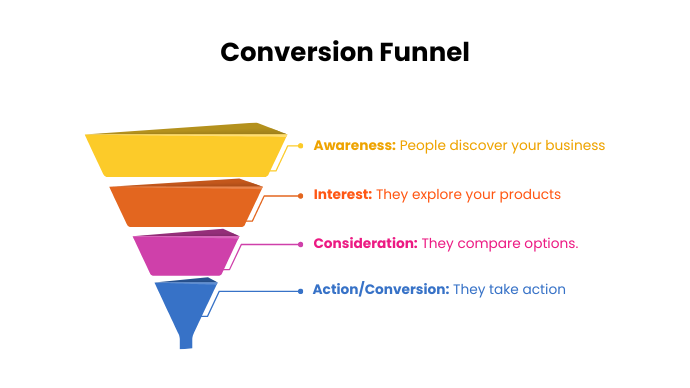
Modern marketing environments have shifted into highly competitive ecosystems where attention is fragmented across multiple platforms and customer journeys are no longer linear. Businesses now operate in conditions where acquisition costs fluctuate frequently, audience behavior changes rapidly, and conversion paths require continuous refinement to maintain performance stability. In this environment, relying on isolated marketing activities is no longer effective, and companies must transition toward structured systems that connect awareness, engagement, and conversion into a unified operational flow that consistently generates measurable business outcomes over time.
UltimateGuideToMarketing builds execution-first marketing systems designed to eliminate randomness from acquisition processes and replace it with controlled, data-driven performance frameworks. Every marketing action is structured around measurable outcomes such as lead quality, conversion rate, customer acquisition cost, and revenue contribution, ensuring that all decisions are tied directly to business performance. This approach removes guesswork from marketing execution and allows companies to scale only what has proven effectiveness in real-world market conditions.
Why Customer Growth Becomes Inconsistent for Most Businesses
The primary reason most businesses struggle with consistent customer acquisition is the absence of a unified system that connects traffic generation, messaging, and conversion optimization into a single coordinated structure. Instead of operating as a system, marketing is often executed as separate activities where advertising, content, and sales processes function independently without shared feedback loops, leading to inefficiencies in targeting, messaging misalignment, and unpredictable performance outcomes that vary significantly across different campaigns and time periods.
Another major challenge comes from short-term marketing thinking that prioritizes immediate clicks, impressions, or engagement metrics without considering long-term customer value and retention dynamics. This leads to unstable performance patterns where campaigns may perform well initially but fail to sustain results over time. Without structured optimization cycles, businesses are unable to refine their acquisition strategies effectively, resulting in inconsistent revenue flow and limited scalability even when advertising budgets increase or market demand is present.
Building Structured Acquisition Systems
Structured acquisition systems are designed to align every stage of marketing execution with a measurable business objective. Instead of treating strategy and execution as separate functions, this model integrates both into a continuous workflow where insights from performance data directly influence campaign adjustments, targeting refinements, and messaging improvements. This ensures that marketing activity evolves dynamically based on real outcomes rather than assumptions or static plans.
These systems rely on continuous iteration across multiple variables including audience segmentation, offer positioning, funnel structure, and communication clarity. By constantly refining these elements based on actual performance data, businesses can systematically eliminate inefficiencies, improve conversion rates, and strengthen acquisition channels. Over time, this creates predictable growth patterns where performance becomes more stable, scalable, and resistant to market fluctuations or competitive pressure.

From Isolated Campaigns to Continuous Growth Systems
Traditional marketing approaches often rely on isolated campaigns that are launched, optimized for a short period, and then discontinued without fully integrating insights back into a larger system. This creates fragmentation in data interpretation and prevents businesses from building cumulative learning across campaigns. In contrast, system-based marketing treats each campaign as part of an ongoing acquisition engine where performance insights are continuously fed back into the structure to improve future outcomes.
This continuous feedback loop transforms marketing from a reactive process into a proactive growth mechanism. Every interaction, whether it leads to a conversion or not, becomes valuable input for optimizing future performance. As a result, businesses gradually improve targeting accuracy, reduce acquisition costs, and increase customer lifetime value through consistent refinement of messaging, funnel structure, and audience engagement strategies across all active channels.
Predictable growth is not achieved through isolated campaigns but through systems that evolve with every execution cycle.
Conclusion
Sustainable customer acquisition requires more than running ads or generating traffic; it requires structured systems that integrate execution, measurement, and optimization into a continuous growth loop. Without such systems, businesses remain dependent on unpredictable marketing performance that fluctuates with external conditions and lacks long-term scalability across competitive environments.
UltimateGuideToMarketing operates as an execution-focused marketing partner that builds these systems directly inside real business environments. The goal is not to teach concepts but to implement working acquisition frameworks that generate measurable improvements in leads, conversions, and revenue through continuous optimization and real-world performance refinement.
Leave a Reply